Lean Kaizen in Construction Industry

Faster, Safer, Smarter Projects through Lean Kaizen

ENQUIRE NOW

Construction projects often face long and unpredictable timelines, frequent rework, material wastage, and high supervisory effort just to keep sites progressing. Lean Kaizen enables construction companies to fundamentally redesign how projects are planned and executed so that work flows reliably—reducing project cost and duration while improving safety and quality.

Our experience across residential developments, brick plants, and infrastructure sites demonstrates how structured Lean tools—such as the Last Planner System, Lean Workstructuring, Daily Work Management, and OEE-based equipment improvement—can significantly enhance performance on live projects.


Pre-Lean Challenges in Construction

High waiting and idle time

Workers often wait for instructions, materials, approvals, or equipment, leaving work fronts idle and creating the classic issue of “workers waiting for work, and work waiting for workers.

Delays and bottlenecks from poor coordination

Trade interfaces are weakly planned; material dispatch from stores is late; and movement of materials within and across sites is slow and unstructured.

Heavy supervisory workload

Engineers, supervisors, and managers perform multiple layers of inspections and repetitive monitoring, often spending 60–70% of their time on coordination rather than technical or value-adding work.

High material wastage and inefficient plant operations

Frequent minor stoppages, speed losses, and long changeovers reduce brick plant productivity and increase overall project cost.

Excess inventory and high carrying cost

Raw materials, consumables, and spare parts are overstocked because planning is not aligned to actual project schedules, increasing working capital and space constraints.


Operational Excellence in Construction

Planning & Coordination Using the Last Planner System

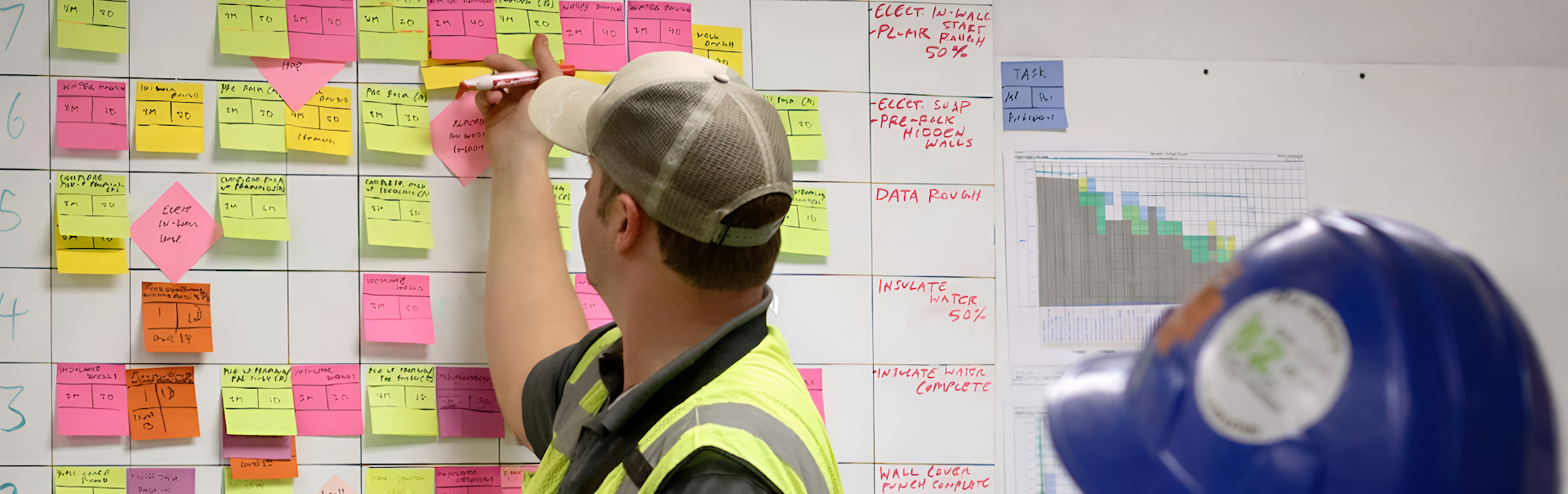
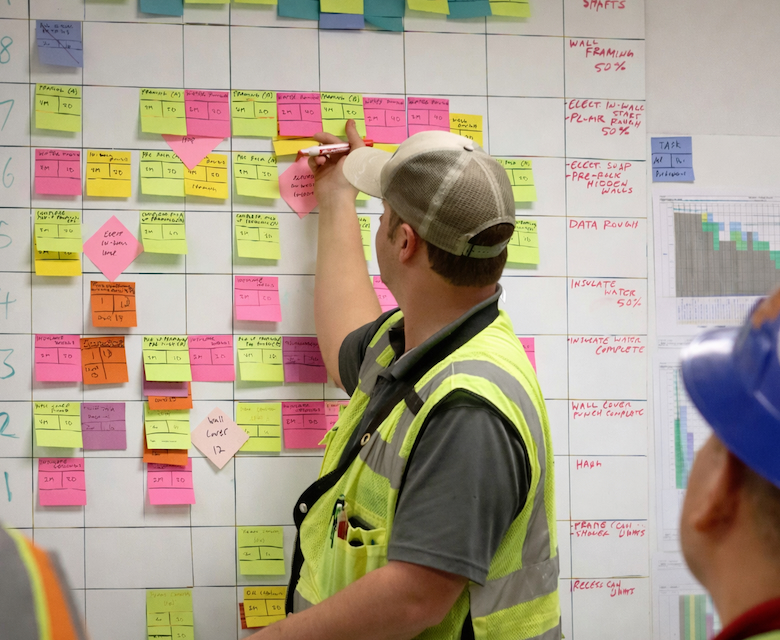
  • Implement the Last Planner System (LPS) — including master scheduling, phase planning, 6-week lookahead plans, weekly commitments, and daily huddles — to convert “wishful Gantt charts” into reliable, collaboratively planned weekly promises.
  • Use Lean Workstructuring to align design, supply chain, and site execution so trades flow smoothly floor-to-floor, reducing stop-start working and firefighting.
  • Make constraints (drawings, approvals, materials, manpower, equipment) visible and proactively removed before work begins, cutting last-minute surprises at site.

Manpower Productivity & Role Clarity

  • Analyse daily work content using Daily Work Sheets, time studies, and site observations to understand value-adding vs non-value-adding time across supervisors, engineers, managers, and officers.
  • Eliminate duplicate inspections and over-processing through clear quality checkpoints and standardised responsibilities.
  • Introduce Daily Work Management (DWM) and standard work for all roles so meetings, follow-ups, monitoring, and reporting are time-boxed and disciplined.
  • Use the analysed work content to scientifically determine optimal headcount and rebalance teams across projects.

Material Flow, Brick Wastage & Site Logistics

  • Map end-to-end material flow (bricks, cement, steel, finishing materials) to identify waiting, double-handling, and internal transport waste.
  • Run focused Kaizen events on brick wastage — tackling breakages in transport, poor stacking, rework due to dimensional issues, over-ordering, and ineffective handling.
  • Improve store layout, visual management and 5S in site stores and warehouses to reduce searching and unnecessary movement.

Brick Plant & Equipment Effectiveness

  • Apply TPM and OEE principles to brick plants, batching plants, and critical construction equipment.
  • Use Pareto and root cause analysis to target chronic downtime issues; deploy autonomous and planned maintenance to stabilise performance.
  • Improve changeovers, speed losses, and stoppages using SMED and structured breakdown analysis.

Inventory & Spare-Parts Optimisation

  • Analyse stock across depots and locations to identify slow-moving, high-value, and over-stocked items.
  • Link procurement and replenishment to Last Planner schedules, reducing both shortages and excess inventory.
  • Deploy spare parts planning standards such as ABC analysis, criticality classification, and optimal reorder levels to reduce capital tied up without affecting uptime.

Our Consulting Impact in Construction

0 % -30

Reduction in project lead time

0 % -27

Reduction in work content for engineers and junior engineers

+ 0 % +25

Improvement in overall manpower productivity

0 % -50

Reduction in material wastage

+ 0 % +25

OEE improvement in raw material manufacturing plants

+ 0 % +40

Reductions in carrying cost for inventory and spare parts

What to Expect

Manpower productivity Improvement

Reduction in overall project duration on targeted phases

Reduction in material wastage

Higher equipment utilisation

Reduction in inventory and working capital tied up in materials and spares

Our Clients

Senegindia, Senegal

My Home Constructions, India


Our Clients Results

CASE STUDY

Retail construction and refurbishment projects complete faster and more reliably through Lean Kaizen

Construction

Operational Excellence helped the client deliver construction and refurbishment projects on time and on cost while improving safety and control with zero accidents, zero equipment losses and better integration of all departments.

Lean Kaizen helps construction companies bring discipline, flow, and reliability to projects. By strengthening planning, improving manpower productivity, boosting equipment performance, and streamlining material flow, it cuts waste and delays, enhances safety, keeps sites organised, surfaces issues early, and drives daily performance improvement.

Connect with our Experts!

With experience across diverse industries and challenges, we deliver unparalleled insights and solutions especially designed as per the needs. For more details, contact us today!

contact-with-expert-form