RIBCON
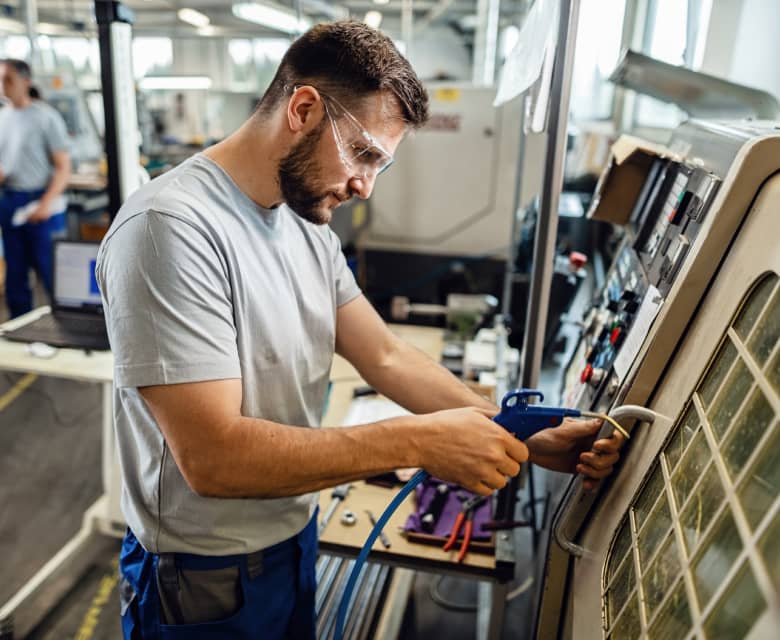
Autonomous Maintenance is one of the key pillars of Total Productive Maintenance (TPM) empowering machine operators to take ownership of routine maintenance tasks—such as cleaning, lubricating, inspecting, and minor adjustments—rather than relying entirely on maintenance technicians.
The word Autonomous is derived from autonomy and gives the operator increasingly more autonomy from the maintenance department as they move through seven steps of Autonomous Maintenance. Before implementation of Autonomous maintenance, Operators are focussed only on Production & all kinds of problems are solved by Maintenance teams.
As we proceed with the various steps of AM, the Operator starts taking care of equipment, Unplanned downtimes are reduced & Maintenance team starts focussing on improving Preventive maintenance activities. The goal is to build a sense of ownership, keep equipment in optimal condition, and prevent breakdowns before they occur. Key objectives of Autonomous Maintenance is to

Take care of machines by Cleaning, Inspection, Lubrication & Tightening

Take care of small problems on machines and immediately highlight problems that he cant solve

Prevent accelerated deterioration of machines thus improving overall equipment effectiveness (OEE)
Autonomous Maintenance transforms operators from passive users to proactive caretakers of their equipment. It’s a cornerstone of operational excellence—driving reliability, reducing costs, and fostering a culture of continuous improvement.





AM Step 1-3: Equipment Starts Working Better
At this stage, Operators start developing fault finding capabilities, identifying abnormalities on equipment and start thinking of improvements and solving basic issues. This results in reduction of unplanned downtime and improvement in equipment performance.
AM Step 1: Initial cleaning
AM Step 2: Reduce Cleaning, Inspection and Lubrication time
AM Step 3 : Tentative Standards
AM Step 4-5: People start working better
Operators start taking ownership to detect breakdowns, unplanned downtimes on equipment & making improvements. With better knowledge & skills, people start working better leading to zero downtimes, minor stoppages and defects.
AM Step 4: General inspection
Training to operators to identify and eliminate minor abnormalities, visually identify what is normal and abnormal and sustain the improvements achieved.
AM Step 5: Autonomous Inspection
AM Step 6-7: Entire plant starts working better
The operator starts taking full control of equipment & the entire plant starts working better leading to sustained performance and lower overall costs.
AM Step 6: Standardization: Standardization aims at ensuring maintenance and management of previous Steps (maintaining basic conditions, daily inspection on equipment) by expanding the operator roles. Key activities done in AM step 6 are
AM Step 7: Autonomous Management
AM Step 7 focuses on building a program of Autonomous management to indefinitely challenge activities that have resulted in improvements and continuously aim for zero failures, zero defects and zero accidents. Key activities include:
Autonomous Maintenance Projects implemented
People trained on Planned Maintenance
Reduction in breakdowns
Improvement in operator skills
One Point Lessons

Visual Look for List

Abnormality Matrix

Operator Skill Matrix

Root Cause Analysis
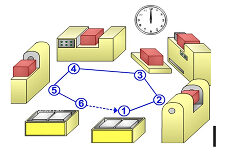
Standard Work

Visual Management
With experience across diverse industries and challenges, we deliver unparalleled insights and solutions especially designed as per the needs. For more details, contact us today!