

Disposable packaging plant cuts energy cost and packing lead time in thermoforming operations
Context and Challenges
A leading disposable packaging manufacturer supplies thermoformed products to food and beverage customers using multiple forming machines and central utilities. Despite strong demand, manufacturing costs were high, with power forming a major share of total cost and compressors alone using about 40% of site kWh. At the same time, flow from forming to packing was fragmented, with large WIP piles, long operator walking distances and a seven-day throughput between forming and finished packed goods.
Management set out to tackle energy cost per kg and flow efficiency together—improving kWh/kg, freeing up capacity and stabilising shop-floor operations without major capital expenditure.
Our Approach
- Energy Conservation on Thermoforming & Utilities: We collected and analysed power data and broke down total power consumption by major consumers and quantified the saving potential and payback for each prioritising high-impact projects (heaters, conveyors, compressors, lighting).
- Flow Management: Focussed on creating flow from forming to packing, we implemented flow management project: mapped the current layout, drew spaghetti diagrams of material and operator movement, and collected data on throughput time, WIP and manpower productivity. Based on this, we designed a future state with online packing, sharply reduced WIP, better ergonomics and shorter, more direct product flow.
- Implementation & Standardisation: Conducted 5S audits and “cleaning is inspection” activities to stabilise forming and packing areas. Implemented specific energy projects on thermoforming machines, conveyors, compressors and lighting. Created simple visual controls, targets and daily checks to sustain both energy and flow improvements.
Key Strategies Implemented
- Energy Mapping and Machine-Level Improvements: Analysed heater box usage on thermoforming machines and adjusted the number of heaters run based on mould size and eliminated unnecessary accessory loads.
- Compressed Air System Optimisation: Proposed and evaluated an intermediate compressor controller to reduce run time and unload losses, with an estimated 10% saving on compressor
- Lighting Rationalisation: Assessed the connected load and usage pattern for lighting across the plant. Identified opportunities for switching off non-essential lighting during day-time, rationalising fittings and using more efficient lamps.
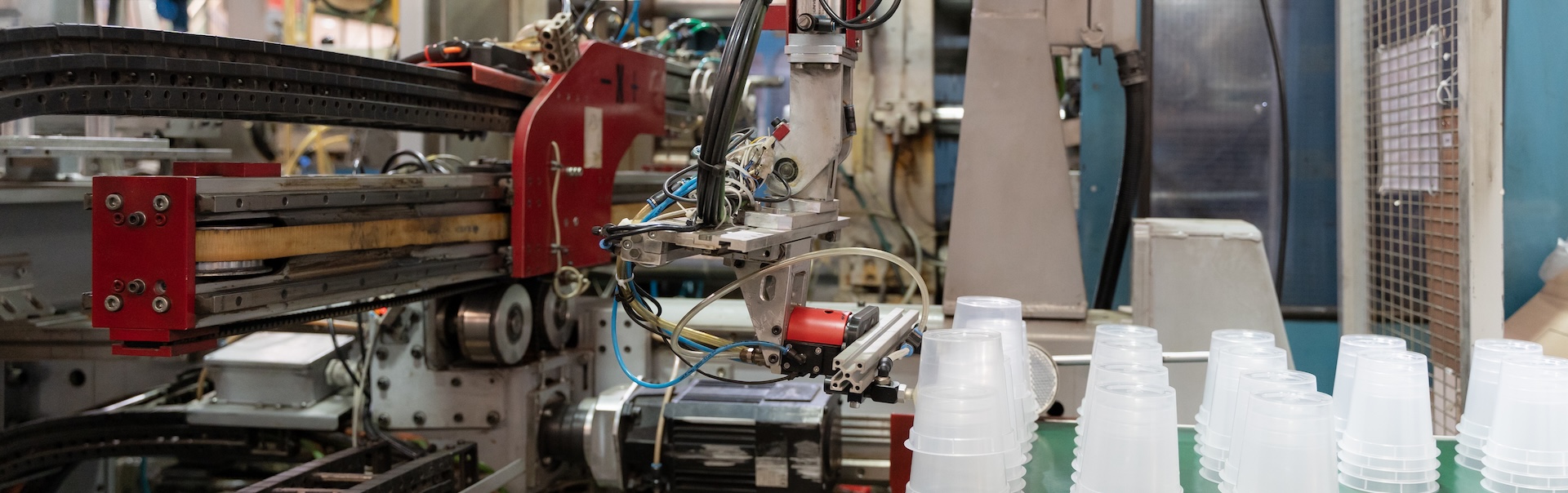
- Flow Redesign from Forming to Packing: Prepared detailed spaghetti diagrams, introduced online packing directly from forming machines, eliminating large accumulation and excess handling between intermediate locations, designed and implemented jigs for counting cups and adjusted packing ergonomics.
- 5S and Daily Work Management: Conducted 5S audits and introduced daily checks and simple performance tracking for packing teams, reinforcing the new flow and visual standards
Results Achieved
- 10% reduction in compressor power consumption
- 99% reduction in Throughput time, reduced from 7 days to 24 minutes
- 50% reduction in Manpower for packing while productivity improved double
- WIP inventory reduced from 432 kg to 9 kg, freeing up space and exposing problems more quickly instead of hiding them in piles of semi-finished cups
Overall, the company achieved substantial improvement in both energy performance and operational flow, laying a strong foundation for further Lean Kaizen projects across other machines, products and utilities in its disposable packaging operations.