

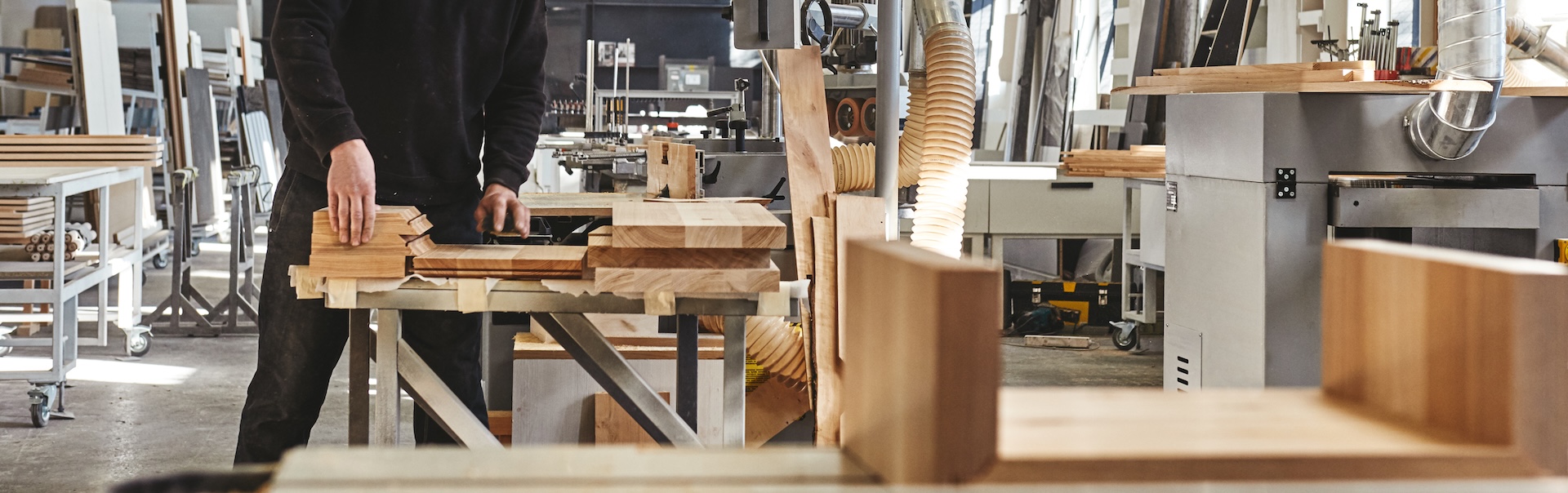
Implementation of focussed lean kaizen workshops centered on redesigning layout and flow, stabilising methods, improving material supply, and strengthening daily controls have transformed the lines into high productivity flow-based cells.
Context and Challenges
Mid-sized office furniture manufacturer, supplying workstations, pedestals, cabinets, office chairs to corporates and institutes, with conventional factory layout was facing key issues like low output per shift, zig zag material movement, high WIP and longer lead times with re-work and quality issues.
Due to high product variety, frequent small batches and tight delivery commitments, management was looking for improving manpower productivity and overall delivery performance without major capex, and to free up floor space for new product lines.
Our Approach
As part of a comprehensive improvement program, we followed a four-step process:
- Assessment & Data Analysis: Conducted time and motion study and mapping the current material and information flow using value stream mapping to identify key improvement areas.
- Kaizen workshop: Conducted intensive kaizen workshops at shopfloor focussed on layout, line balancing, material presentation and standard work.
- Training & Standardisation: Standardisation of successful practices and alignment and training of line leaders and supervisors on standard work, daily work management, waste identification and 5 Why analysis.
- Project Reviews: Facilitated regular reviews with internal teams, targeting high-impact areas based on the 80/20 principle, leading to increased output with reduced effort. Established short daily huddles at the line to review previous day performance and agree actions.
Key Strategies Implemented
- Flow-Based Layout & Line Balancing – Transitioned from traditional functional layouts to efficient continuous-flow layouts by designing and implementing flow-oriented layouts and U-shaped cells. Machines, tools, and components were positioned close to the point of use to minimise walking and searching, while workload was balanced across processes to consistently meet TAKT time and improve productivity.
- Standard work - established standard work for operators to to reduce variation in product cycle times and to reduce rework.
- 5S implementation - tool shadow boards, marked locations for jigs/fixtures, clear floor markings to reduce searching, waiting and movement times.
- Visual performance boards showing daily plan vs actual, rework, and key issues.
Results Achieved
- Increase in manpower productivity by 50-55%, with significantly more units produced per shift from the same machines.
- Manpower saving of ~60% on targeted products, by balancing workloads and eliminating non-value-added movement and waiting.
- WIP reduction of around 50% in the flow from machining to final assembly, freeing up floor space and reducing handling.
- Lead time reduction from about 10 days to ~3 days for selected office furniture product families, improving responsiveness to customer orders.
- Noticeable reduction in rework and minor defects, as standards, 5S and in-process checks became part of daily work.