

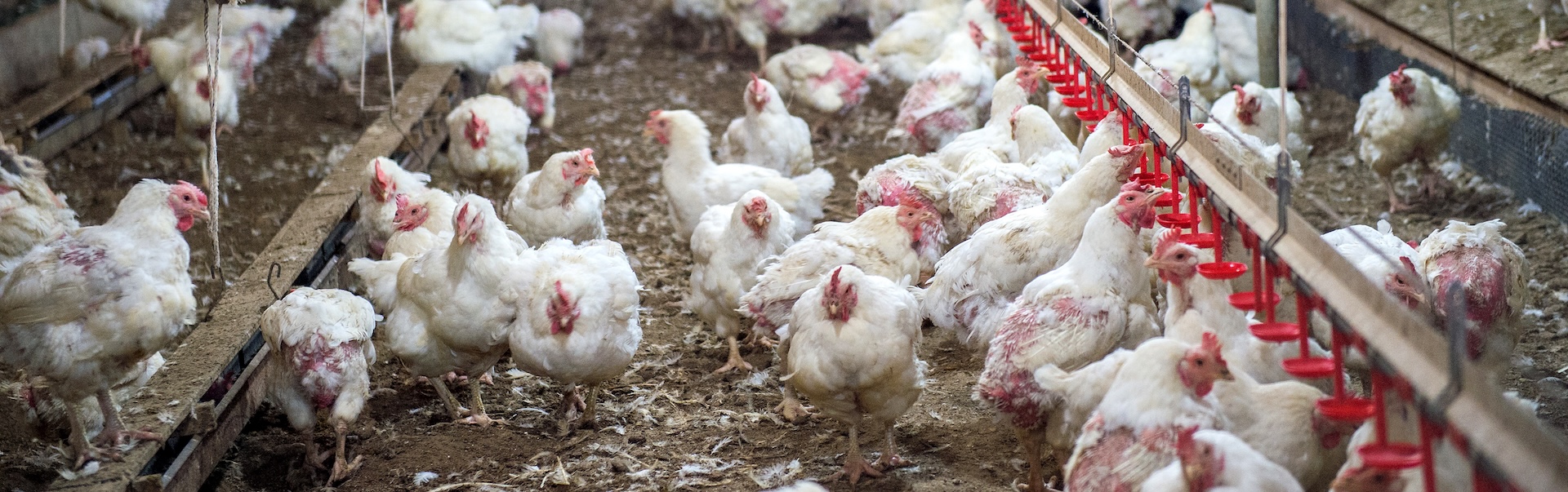
By applying Lean Kaizen to brooding, feeding, flock health and cycle planning, a leading poultry business reduced cost per kg live bird, improved FCR and mortality, and increased shed utilisation without major capital investment.
Context and Challenges
The company operates multiple broiler farms and contract grower sites supplying fresh and processed chicken to retail and food-service customers. Before Lean Kaizen, farms faced:
- High and variable production cost per kg live bird across farms and flocks.
- Feed conversion Ration (FCR) above target and limited visibility of feed wastage and performance by flock or house.
- Higher-than-desired mortality and culls, especially in brooding and late grow-out stages.
- Poor planning and control of farm activities, causing uneven bird weights, downgrades and frequent firefighting.
- Limited use of structured data and standard routines—most decisions were based on individual experience.
Management wanted a structured way to reduce cost per kg, stabilise flock performance and build a culture of disciplined daily management at farm level.
Our Approach
The cost-reduction initiative was run as a Lean Kaizen project across selected company farms and contract growers:
- Diagnostic & Data Collection
- Collected flock-wise data on FCR, mortality, average weight, days to market, feed intake and major cost drivers.
- Visited representative farms to observe conditions, practices and deviations from existing technical standards.
- Current-State Mapping & Loss Analysis
- Mapped the end-to-end process from chick placement to bird dispatch, highlighting critical steps, checks and handovers.
- Identified loss drivers such as brooding failures, feed wastage, delayed response to disease, poor ventilation and unplanned idle days between flocks.
- Kaizen Workshop & Future-State Design
- Conducted a cross-functional Kaizen workshop with farm managers, supervisors, vets and planning.
- Used MUDA analysis, Pareto and Why–Why to prioritise root causes impacting cost per kg and flock outcomes.
- Designed future-state routines, control points, checklists and performance boards for pilot farms.
- Implementation, Standardisation & Daily Management
- Implemented countermeasures at pilot sites with on-ground coaching.
- Converted new practices into SOPs and simple visual standards.
- Introduced Daily Work Management with farm-level boards, short daily huddles and weekly technical reviews.
Key Strategies Implemented
Brooding & Grow-Out Standardisation
- Defined clear pre-placement standards for house preparation – cleaning, disinfection, litter, pre-heating and equipment checks.
- Standardised brooding temperature curves, chick density, feeder/drinker space and first 7–10 day management routines.
- Created simple visual SOPs for daily checks on water, feed, temperature, ventilation and bird behaviour during brooding and grow-out.
Feed Management & FCR Control
- Analysed feed usage by flock and house to highlight unexplained variances and wastage points.
- Introduced regular line-walk audits to catch issues such as feed spillage under lines, wrong feeder height and excess fines.
- Standardised feeding schedules, feeder adjustments and feed-phase transitions (starter–grower–finisher) based on flock age and live data rather than habit.
Mortality, Health & Biosecurity Discipline
- Tightened flock health monitoring through daily mortality tracking, simple cause coding and quick escalation to the vet team.
- Standardised biosecurity: entry protocols, foot dips, PPE, vehicle movement and visitor control.
- Introduced basic investigation formats and Why–Why analysis for mortality spikes, with corrective and preventive actions assigned and followed up.
Planning, Cycle Management & Shed Utilisation
- Mapped the full flock cycle to minimise idle days between crops and avoid unnecessary extended growing days.
- Improved coordination between hatchery, farms and processing plant so placement, thinning and final catch dates matched plant capacity and demand.
- Defined simple planning and confirmation routines so sheds, feed, litter and labour were ready before chick placement.
Visual Management & Daily Work Discipline
- Installed farm-level performance boards showing FCR, mortality, average weight, days, cost/kg and status of key actions.
- Introduced short daily huddles at farm level to review yesterday’s performance, today’s risks and 2–3 focused actions.Clarified roles and review rhythm for farm supervisors, managers and technical staff through responsibility matrices and weekly review formats.
Results Achieved
Within a few flock cycles on the pilot farms, the Lean Kaizen programme delivered tangible gains:
- Reduction in production cost per kg live bird by approximately 8–12%, driven by better feed efficiency, lower mortality and improved utilisation.
- Improvement in FCR by about 0.08–0.12 points on pilot farms, with more flocks meeting or beating target feed conversion.
- Overall mortality reduced by roughly 20–25% (relative), particularly in the critical brooding period.
- Feed wastage cut by an estimated 25–30% through better feeder setup, monitoring and handling.
- Higher shed utilisation, with productive days per year per house improving by 10–15%, increasing total kg output from existing infrastructure.
By applying Lean Kaizen systematically in poultry farming, the company converted scattered “good practices” into standard, daily routines backed by data and visual control. The focus on brooding discipline, FCR management, mortality reduction and cycle planning delivered measurable reductions in cost per kg while improving flock health and operational stability.