

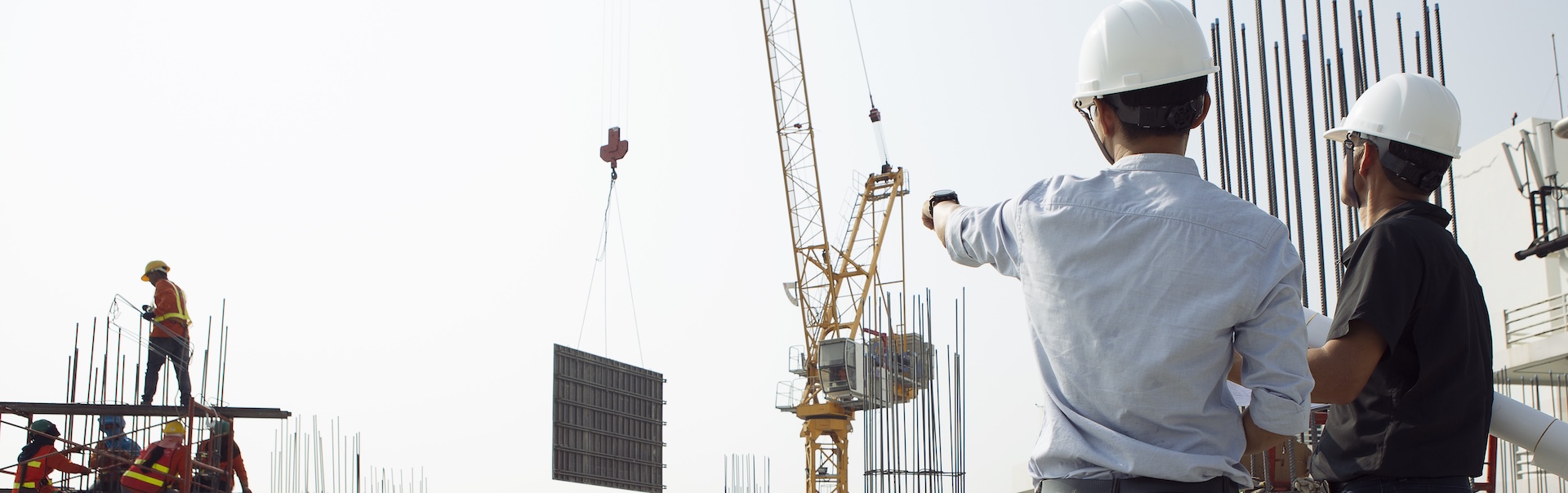
Operational Excellence helped the client deliver construction and refurbishment projects on time and on cost while improving safety and control with zero accidents, zero equipment losses and better integration of all departments.
Context and Challenges
The client managed both product development for construction systems and retail construction / refurbishment projects (e.g. supermarket outlets). Typical issues included:
- Extremely long lead times (around 28 months) for new products used in construction, delaying time-to-market and impacting business plans.
- Construction and refurbishment projects routinely exceed budgets, requiring 120–150% of planned cost to recover delays.
- Damaged equipment and materials, and safety risks for workers and customers when stores remained open during refurbishment.
- Project plans defined only at milestone level, with limited detail, large hidden safety buffers and poor integration between departments (engineering, construction, operations, suppliers).
- Plans were often not visible to all stakeholders, leading to surprises, local optimisation and late problem discovery.
Our Approach
Lean Kaizen in construction was implemented using a project-management value stream approach for both product development and site works:
Project Flow Review & Root Cause Analysis
- Reviewed end-to-end flow from engineering concept to product launch, and from design to completed construction/refurb.
- Identified root causes: milestone-only planning, lack of detailed task breakdown, invisible plans, high individual safety margins and weak departmental integration.
Obeya Room (Visible Control & Planning)
- Created an Obeya Room to house all key project information: macro plan, detailed tasks, KPIs, risks and status for each stage (engineering, approvals, preparation, construction).
- Established cadence of daily, weekly and periodic project meetings with clear agendas, using visual boards rather than scattered emails and spreadsheets.
Pull Planning with Buffers
- Replaced top-down milestone planning with pull planning, starting from required completion dates and working backwards to define realistic task sequences and handovers.
- Used explicit time buffers at critical points instead of hidden safety in every task, making risks and constraints visible and manageable.
Daily Kaizen for Engineering & Construction Teams
- Introduced daily briefings to review yesterday’s progress, today’s tasks, blockers and immediate actions.
- Ran Kaizen events to improve long lead-time tasks (engineering deliverables, approvals, testing, critical site activities).
5S, Standards & Risk Kanban on Sites
- Applied 5S and visual management on construction sites and store rears to separate live store operation from “shipyard” areas, reducing clutter and accident risk.
- Implemented a Risk Kanban to capture, prioritise and track mitigation actions for project and site risks (delays, safety, equipment, interfaces with operations).
Key Strategies Implemented
Engineering Process Mapping & Design Review (DR)
- Mapped engineering stages from process mapping → macro design review → approvals → detailed design → construction planning → execution.
- Introduced standard Design Review (DR) milestones to validate deliverables, dates and scope at each stage before moving forward.
Obeya Room & Project Cadence
- Set up an Obeya Room organised by project stages and KPIs, used by permanent and temporary teams.
- The permanent team held daily briefings with a fixed agenda: review of tasks and timelines, issue analysis, indicator updates and daily/weekly planning.
- Project milestones such as 3 weeks for approvals, 3–5 months for preparation and 3–5 months for construction were tracked visually, with DR checkpoints to confirm or adjust dates.
5S & Site Organisation
- Implemented 5S on construction sites
- Separated store rears from work areas,
- Removed obsolete and damaged materials,
- Controlled excess material and equipment on site.
- Used floor markings, labelled zones and equipment parking areas to minimise searching, handling and breakages.
Equipment Booklet & Weekly Delivery Control
- Introduced an equipment booklet and weekly delivery control, linking store delivery and site assembly with a target of less than one week of waiting, to avoid idle inventory and breakages.
- Planned weekly equipment flows in the Obeya Room so site teams know exactly what arrives when and where it will be installed.
Risk Kanban & Performance Indicators
- Implemented a Risk Kanban board to visualise issues such as survey failures, design changes, layout updates, equipment breakdowns and mixed store/shipyard areas.
- Tracked performance indicators including on-time completion, budget adherence, non-conformities, accidents, incidents and sales performance during works.
Results Achieved
Product Development for Construction Use
- Time to Market was reduced by about 25%, with total project lead time improving from 28 months to 21 months, using pull planning, Obeya control and daily Kaizen for engineering and testing teams.
- Engineering completeness improved, with better integration between departments and fewer late design changes.
- Project management time reduced as teams worked from a shared, visible plan rather than re-planning repeatedly.
Construction & Refurbishment Projects
- Construction and refurbishment completed on time and on cost, replacing earlier patterns of 120–150% cost to catch up delays.
- Supermarket sales increased even during work, thanks to better coordination between construction and daily operations, and cleaner, safer sites.
- Achieved zero accidents and zero equipment losses, supported by 5S, clear segregation of work areas and weekly equipment control.
Overall Impact
- Greater visibility and control over project flow from design to handover.
- Stronger cross-functional collaboration between engineering, construction, operations and suppliers.
- A repeatable Lean project management model that can be applied to future construction, refurbishment and product-development projects.