RIBCON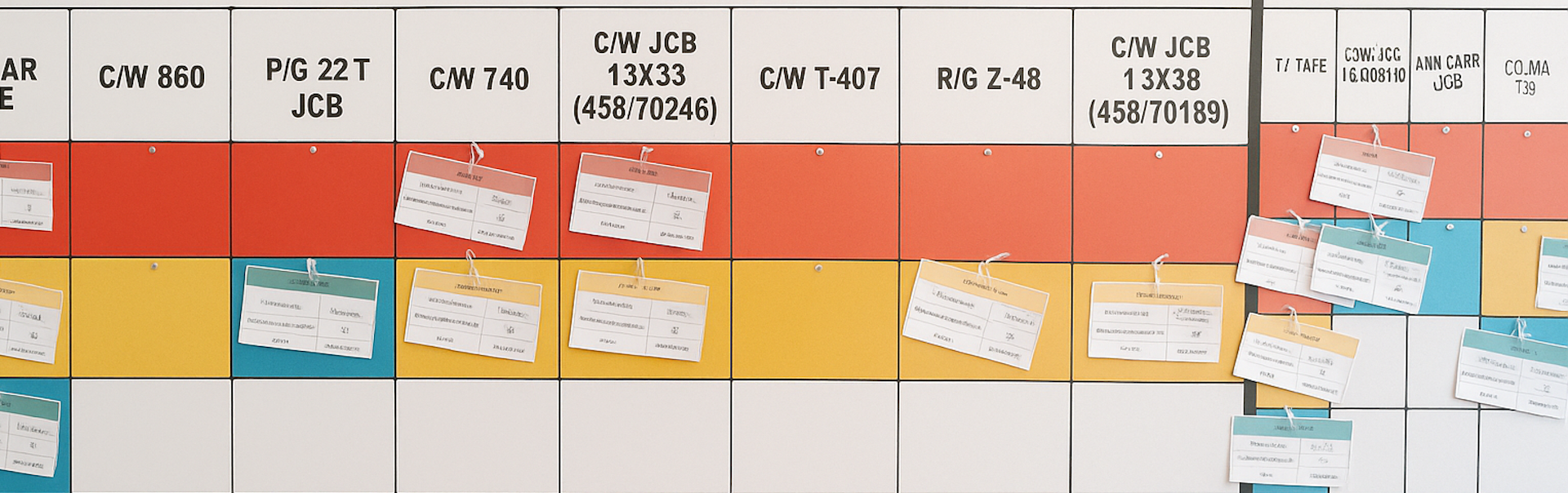
Kanban (Japanese for “visual card” or “signboard”) is a Lean inventory control system that uses simple visual signals—such as cards, bins, or digital dashboards—to manage the flow of materials and production. By replenishing inventory only when there is real consumption, Kanban creates a true Pull System that eliminates overproduction and excess stock. Each Kanban signal clearly identifies the material, quantity, customer, and supplier, ensuring accurate and timely movement.
Kanban have two functions in a production operation: They instruct processes to make products and they instruct material handlers to move products. The former use is called production kanban (or make kanban); the latter use is termed withdrawal kanban (or move kanban). Production and withdrawal kanban must work together to create a pull system.
As Lean Consulting experts, we design and implement customized Kanban systems that align with your production requirements and supply chain dynamics. Our structured, hands-on approach ensures your team not only adopts Kanban but sustains it for long-term success.

Materials move only when a Kanban signal is triggered.
Production and supply are directly linked to consumption.

Teams can instantly see what needs to be produced, moved, or ordered.
Prevents confusion and delays on the shop floor.
Clear routes and rules for replenishment reduce complexity.
Eliminates overproduction and unnecessary movements.

Kanban encourages small, frequent replenishment batches
Reduces waiting time and avoids bottlenecks.

Kanban loops can be easily adjusted for demand fluctuations.
Reduces the risk of obsolete stock and ensures just-in-time supply.
Eliminate excess stock and reduce the costs of raw materials, WIP, and finished goods.
Free up working capital by maintaining leaner inventory levels instead of excess stock.
Maintain the right stock at the right time, ensuring materials are always available without overproduction or shortages.
Avoids scrap, rework, and obsolescence by aligning production directly with customer demand.
Shorter lead times and faster replenishment through demand-driven signals and smaller, more frequent cycles.
Projects
Reduction in Inventory levels
Reduction in stock outs
Reduction in space usage
An inventory management system is created to define what materials to be kept in stock and how much to keep. For deciding what to keep, Runner repeater stranger analysis is conducted and for deciding how much to keep – two key methods are used – Fixed TIme variable quantity and Fixed quantity variable time method. Once what to keep and how much to keep is defined, we move to the next step i.e deciding when to produce or order and how much to produce or order. These two steps are key for establishing a Kanban system.
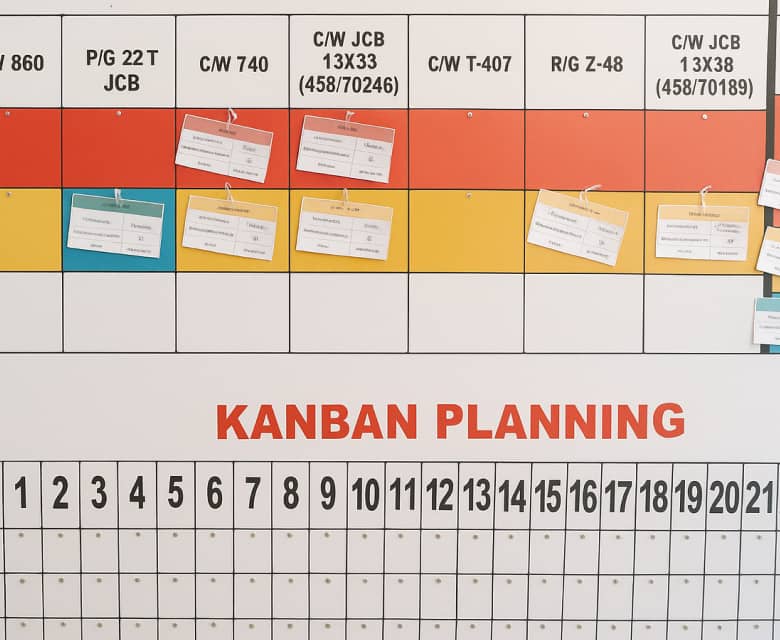
After we have decided how much to keep maximum standard inventory is converted into number of Kanbas may be decided based on the pack size or based on the number of products that are kept on the one palette. Once the number of kanbans are decided, a Kanban priority board is created. Kanban priority board shows a list of all the products to be ordered or manufactured. Total number of Kanbans are divided into Red, Yellow and green zones based on cycle stock, safety stock and buffer stock
Once products are sold, kanbans get removed from the product (pack size or pallet) and get loaded to sequencer and are loaded from green to red zone. No kanban in the sequencer board indicates the amount of inventory that has been sold or consumed.
Kanban sequencing for production or ordering is decided based on no of kanban on sequencer board and zone of kanban (red, yellow or green), sequencing of kanban to produce or order is decided at a set frequency (Weekly or daily). Kanbans for runner products in red or yellow zones always get priority for production. Production capacity is a key consideration for loading Kanbans onto the machines.
Load Kanbans on machine onto kanban sequence, typically a rail mechanism ensuring FIFO or a board showing sequence of kanban to be produced. Once the product is produced as per kanban or received as per order, kanban is attached to product produced or received (pack size or pallet size) and is moved to a storage area.
With experience across diverse industries and challenges, we deliver unparalleled insights and solutions especially designed as per the needs. For more details, contact us today!