RIBCON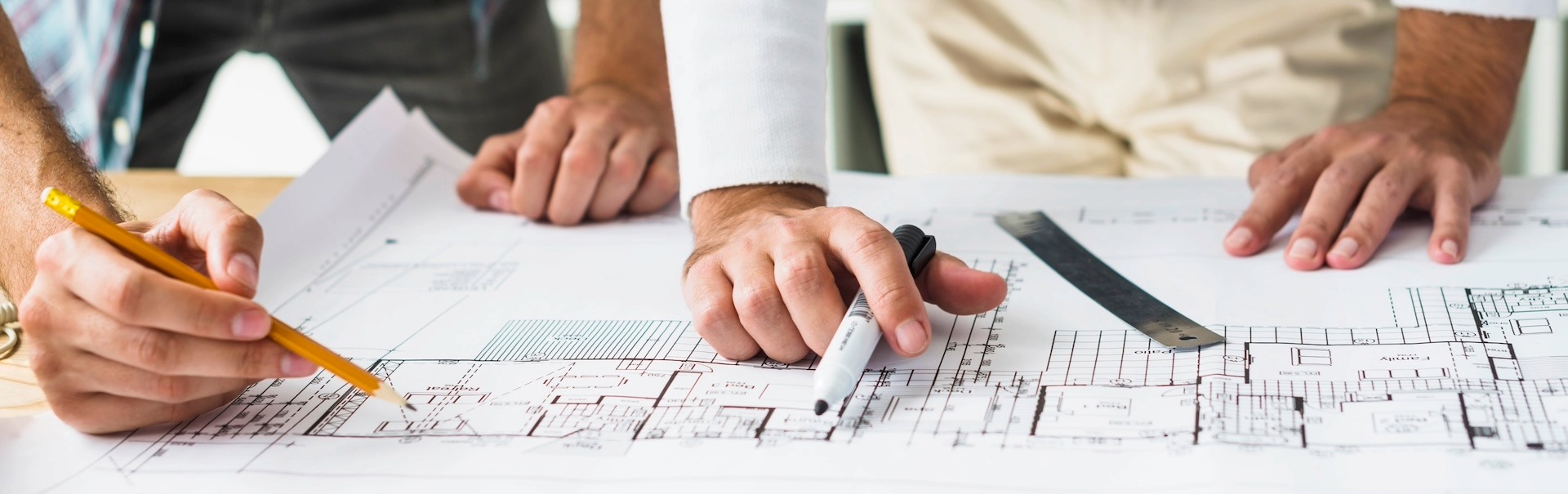

Driven by the need for efficiency, agility, and innovation, designing a Lean layout is a necessity for modern manufacturing. A well-structured lean layout eliminates unnecessary movement, reduces waste, and optimizes space utilization, creating a streamlined production flow. This, in turn, reduces downtimes, shortens lead times, and improves overall productivity. Lean layout not only enhances productivity but also fosters innovation by enabling real-time problem-solving, faster decision-making, and a culture of continuous improvement, enabling factories to adapt quickly to market demands and technological advancements.
We bring in experienced consultants, deep industry expertise, and advanced lean tools to design a layout customized to your specific requirements. By integrating best practices in lean manufacturing, we create scalable, flexible, and future-ready layouts that drive productivity and innovation. Whether you’re setting up a new facility or optimizing an existing one, our tailored solutions help you achieve maximum efficiency and long-term success.


Designing and implementing a lean layout involves a structured approach to optimize workflows, eliminate waste, and enhance productivity. The process begins with a comprehensive assessment of the current layout, incorporating lean principles to create a streamlined flow and restructuring workstations, repositioning equipment, and integrating automation or digital tools to enhance efficiency. By following these structured steps, manufacturers can achieve higher efficiency, reduced costs, and a more agile production environment, setting the foundation for a future-ready factory.
Lean layout design begins with a comprehensive assessment of the current layout, focusing on understanding process flow through detailed process flowcharts and cycle time studies.
Videography is used to analyze cycle times for each process, enabling the identification of non-value-adding activities such as waiting, unnecessary movement, excessive transportation, rework, and overprocessing. Additionally, an in-depth analysis of Overall Equipment Effectiveness (OEE) losses helps pinpoint waiting times that impact material flow. These insights serve as the foundation for optimizing the layout to improve efficiency and reduce waste.
Workload & Line balancing is one of the crucial steps in lean layout ensuring smooth operations, minimizing bottlenecks, and optimizing resource utilization. This process involves calculating TAKT time to assess current customer demand rate and balance cycle time using line balancing charts between processes to minimise WIP and to match TAKT time.
Process capacity sheets are created to balance machine requirements to TAKT time. Optimum batch sizes are identified to balance workload between processes wherever one piece flow is not possible. Manpower and machines required are calculated based on TAKT time to ensure efficient resource allocation.
To ensure seamless movement of materials with minimal interruptions, multiple layout options are created using cutouts keeping in mind closely placed machines & workstations to ensure continuous material flow, to minimize walking distance and material movement.
A unidirectional flow is followed to avoid excess transportation and movement. Wherever applicable, a U shape layout is implemented for better utilisation of operators and better line balancing. Ergonomics principles are used to design efficient workstations for operators to enhance productivity using simple / to the scale drawings. 5S and visual management including marking, labeling, signboard, hourly tracking systems and visual controls are deployed to capture productivity and to fill any gaps.
We collaborate with your team to explore various layout configurations, analyze their pros and cons, and select the most efficient option based on Lean principles.
In a lean layout, internal logistics and material handling are optimized to ensure seamless material flow with minimal waste. The internal logistics personnel (Mizusumashi) play a crucial role in efficiently managing material supply and pickup, reducing unnecessary movement and delays. Proper identification of material handling equipment, containers, and transportation methods ensures smooth operations.
Additionally, strategically placing utility equipment enhances supply efficiency, supporting a lean and organized workspace. By integrating these elements, the layout minimizes transportation waste, improves productivity, and enhances overall operational efficiency.
A lean warehouse layout is designed to minimize movement, reduce waste, and improve overall efficiency. Inventory levels are calculated based on a lean pull system, ensuring that materials are stocked only as needed to meet demand while avoiding excess inventory.
The warehouse layout follows Lean Flow and Pull principles, strategically placing storage areas, workstations, and picking zones to optimize material handling. By minimizing travel distances and unnecessary movements, the design enhances productivity, reduces lead times, and supports a smooth and efficient supply chain.
The Lean Layout Implementation begins with Project Charter outlining the scope, objectives, assumptions including resource availability and accurate process data. It also outlines dependencies involving infrastructure readiness, system integrations and presents a business case showcasing cost reduction, space optimisation and improved workflow efficiency with a dedicated project team to drive the execution.
A detailed implementation plan is then developed to ensure the lean layout is executed as designed, aligning with target KPIs. Continuous monitoring and support are provided to stabilize the layout, address challenges, and ensure seamless operation.
Lead time reduction
Manpower productivity improvement
On-time delivery
WIP inventory reduction
Reduction in reworks & defects
Movement time reduction
Reach your factory’s full potential with our breakthrough lean manufacturing strategy and tools.
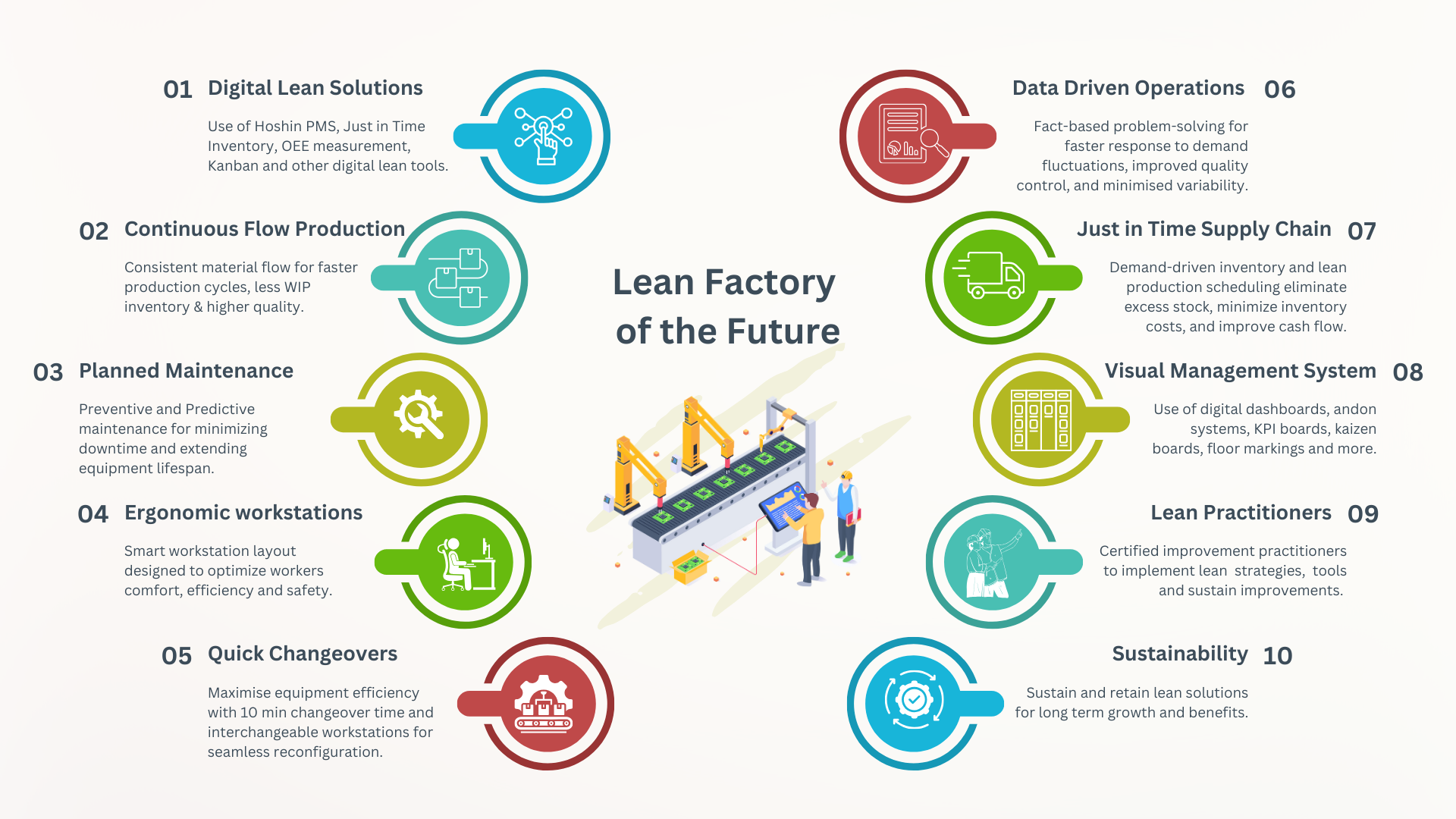

Waste elimination, less movement and travel time of materials and labour, production as per customer demand rate and improved manpower productivity.

Lower defects, less inventory, less equipment downtime, manufacturing based on lean principles can reduce costs by up to 30%

Faster order delivery time and improved order accuracy and quality at a competitive price boost customer satisfaction.

Faster workflows, reduced cycle times and better resource utilisation enhance operational efficiency, ensuring that your facility operates at peak performance.
With experience across diverse industries and challenges, we deliver unparalleled insights and solutions especially designed as per the needs. For more details, contact us today!