
Desktop Banner
Mobile Banner

Phenomenon Mechanism Analysis

A complex problem solving TPM tool to eliminate Chronic Losses

Chronic losses remain a persistent challenge across the manufacturing industry. These losses—whether in the form of recurring equipment failures, quality defects, or process inefficiencies—often go unaddressed at the root level. These losses persist due to weak problem-solving approaches, where machines are not fully understood, operating principles are unclear, contributing factors are overlooked, or phenomena and abnormalities are not thoroughly analyzed through stratification.

Phenomenon–Mechanism (PM) Analysis is a structured approach designed to address such challenges. It’s an effective lean approach in which a chronic undesirable phenomenon occurring in an operation is physically analyzed in accordance with the operations’ principles and parameters in order to explain the mechanism by which the phenomenon arises and to eliminate chronic losses.

The Phenomenon Mechanism Analysis approach helps achieve zero defects and zero losses by thoroughly investigating all causal factors behind abnormalities and addressing them at the source.


Benefits of implementing PM Analysis

Elimination of chronic and persistent losses

Achievement of zero breakdown and zero defect goals

Very effective for dealing with complex problems that have multiple, interrelated, and varying causes.

Prevention of recurrence by setting standards covering all causal factors


Steps of implementing PM Analysis

PM Analysis Step 1

Clarify the Phenomenon

“Clarifying the phenomenon” means using our observation skills to grasp facts and illuminate underlying concepts. Key steps involved in defining phenomenon are:

  • Eliminate preconceived ideas and prevent errors: Clearly specify items to be observed in order to avoid errors based on supposition and rigid thinking
  • Observe on the shop floor: Trace the problem back to the smallest possible units, by personally observing its physical elements at the site
  • Classify phenomena: Adequately classify what you have observed (5W1H)
  • Investigate Deviations: Clarify the distinction between what is normal and abnormal in what you have observed

PM Analysis Step 2

Physical Analysis of Phenomenon

Physical analysis means logically explaining how a phenomenon occurred; from a physical point of view to draw logical relationships between phenomena and their potential causes. Here are the key steps of conducting physical analysis:

  • Identify Operating Principles: Review machine diagrams and manuals to understand the equipment’s basic operating principles
  • Identify Operating Standards: Learn the functions and mechanisms of equipment and devices by sketching simple machine diagrams
  • Identify Interacting elements: Draw contact diagrams to identify what relationships define the phenomenon (Use 3D Diagrams, draw free hand standing in front of equipment)
  • Quantify the physical changes involved: Identify appropriate physical quantities and changes in those quantities

PM Analysis Step 3

Identify Contributing conditions

Contributing condition is any condition that is necessary or desirable for the physical analysis. It is important to consider everything that might contribute to the phenomenon, regardless of preconceived ideas or intuitive judgments. These conditions encompass all causal factors, so this step ensures that no such factors are overlooked. Here are key steps of checking contributing conditions:

  • Identify equipment mechanisms
  • Understand how mechanisms function together
  • Consider Cause & Effect Relationship between mechanisms & abnormal phenomenon
  • Identify contributing conditions related to equipment condition
  • Identify contributing conditions related to inadequate standards and people not following standards
  • Identify contributing conditions related to the quality of previous processes /quality defects in incoming material

PM Analysis Step 4

Study 4M Correlations

The step emphasizes understanding “Primary and Secondary 4M Correlations,” essentially delving deeper to uncover the root causes behind the immediate factors identified. This involves identifying not only direct relationships but also the relationships behind those relationships to create a comprehensive “cause-and-effect chain. This step covers detailed analysis on 4M (Machine, Man, Material & Method)

  • Investigation of the equipment assemblies, sub assemblies, parts, jigs, and tools involved
  • Analysis of human factors, such as operator actions and knowledge.
  • Analysis of materials used in the process and any variations.
  • Review of work methods and procedures employed.

PM Analysis Step 5

Establish Optimal Conditions (Standards)

This step involves setting standard values to judge whether conditions are satisfactory or not. Clear standards are used to verify whether the identified cause is normal or abnormal. Existing standards are reviewed or new standards are established. 

To establish effective and sustainable standards in manufacturing, it’s essential to evaluate the 4Ms — Machine, Manpower, Method, and Material. 

  • Machine: Standards are set based on equipment function, design & Quality Standards
  • Methods: Examine & understand current task standards for equipment setup, operation & assembly & Inspection
  • Manpower: Identify what skills are required to adhere to the standards and current level of skills
  • Material: Quality criteria is used  to clearly identify the characteristics that are established by the previous process

PM Analysis Step 6

Measurement of Causal Factors for Abnormalities

This step involves deciding methods to be used to examine the potential causes for abnormalities. Here are the steps of measurement of casual factors for abnormalities:

  • Measure status of all items listed in contributing conditions 
  • Review and measure primary 4Ms only for contributing conditions whose mea­sured values are different from the standard values 
  • Review and measure secondary 4Ms only for the primary 4Ms whose measured values are different from the standard values

PM Analysis Step 7

Determine Abnormalities to be addressed

  • List the ways in which conditions deviate from the ideal, including slight equipment imperfections and all other causes
  • Using investigation methods, all factors are thoroughly investigated by comparing abnormal conditions against standards
  • Classify as abnormal any items between border of normal & abnormal
  • It’s important to understand causal factors behind each condition classified as abnormal
  • Identify all defects, big and small,regardless of how much they might contribute to the problem

PM Analysis Step 8

Restore, Improve & Sustain

  • Focus on identifying preventive actions to eliminate abnormalities: Analyze the fuguai to determine their causes of less than perfect situation
  • Restoration (to optimal conditions) comes before replacement or design modification
  • After restoration, plan improvements that solve hardware prob­lems, update obsolete technologies and prevent recurrence
  • In restoring and improving equipment, group as many factors as possible
  • Confirm accuracy of each result and work on solutions to prevent the problems or solve problems permanently

Our PM Analysis Experience & Impact

0 + 100

Analysis projects completed

0 + 500

People trained on PM Analysis

0 % -80

Reduction in causes of complex defects and failure

Key Tools used for implementation of PM Analysis

Machine diagram

Contact diagram

Pareto analysis

5W’s & 1H

Cause & effect
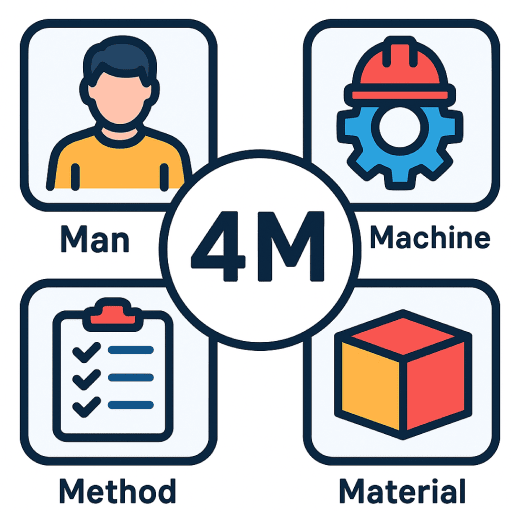
4M analysis


Our Clients Results

CASE STUDY

Toothpaste plant cuts significant material losses using PM Analysis

Phenomenon Mechanism Analysis

By combining PM Analysis with structured root-cause elimination and daily monitoring, a leading toothpaste manufacturer significantly reduced both underfilled and overfilled material losses on critical SKUs – unlocking recurring savings in PM cost while strengthening process capability.

Advanced Lean Manufacturing Tools

Connect with our Experts!

With experience across diverse industries and challenges, we deliver unparalleled insights and solutions especially designed as per the needs. For more details, contact us today!

contact-with-expert-form