 RIBCON
Predictive Maintenance (PdM) is a condition-based approach that uses real-time monitoring and advanced diagnostics to predict equipment failures before they occur. Unlike preventive maintenance, which follows fixed schedules, PdM ensures maintenance is performed only when needed, based on actual equipment condition. This strategy significantly reduces downtime, extends equipment life, and optimizes resource allocation .
Predictive maintenance is increasingly powered by IoT-enabled sensors, artificial intelligence, and cloud-based analytics, enabling organizations to detect subtle changes in performance that traditional methods often miss.
We implement PdM using a proven toolkit of modern technologies, carefully selected to suit the industry, asset criticality, and business goals. Whether in manufacturing, FMCG, energy, or pharmaceuticals, PdM delivers measurable business results — higher uptime, lower cost, and safer operations.
Predictive maintenance is more than a maintenance tool — it’s a strategic enabler for Operational Excellence. By combining smart sensors, analytics, and trained teams, organizations can move from “fixing after failure” to “preventing before it happens.
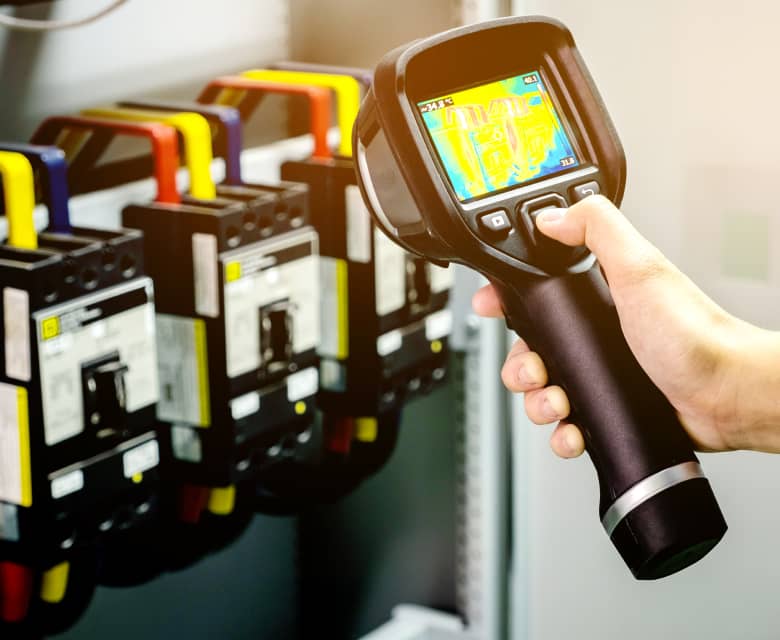
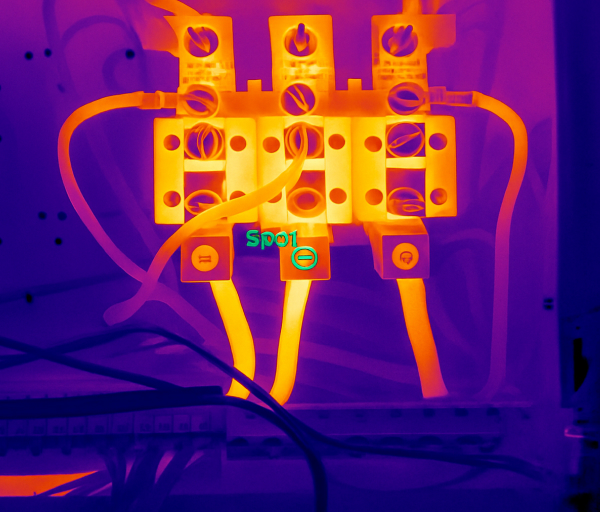
Infrared thermography uses heat-sensing cameras to detect abnormal temperature variations in equipment without interrupting operations. By identifying electrical hotspots, overloaded circuits, insulation breakdowns, and friction-related heat in rotating components, IR enables early intervention before failure occurs. It is especially valuable for monitoring motors, bearings, switchgear, transformers, pipes, and refractory systems.
Regular thermal scans help maintenance teams visualize hidden energy losses, prevent fire hazards, and extend equipment life. As a non-invasive and fast diagnostic tool, IR thermography forms the first line of defense in condition-based maintenance programs.
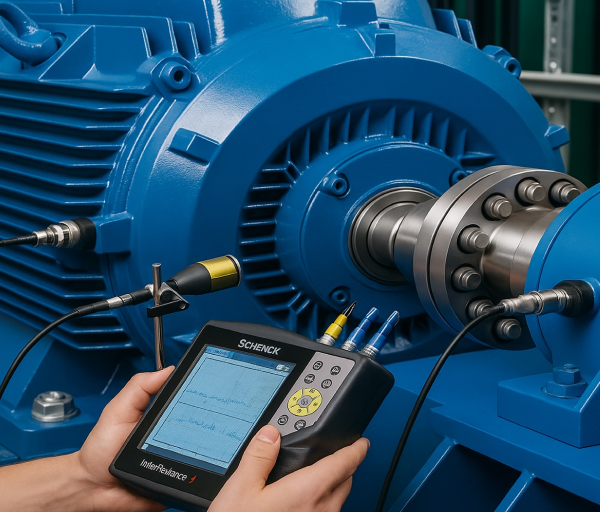
Vibration analysis measures and interprets the vibration signatures of rotating machinery to detect mechanical faults well before they cause breakdowns. Using high-precision accelerometers and advanced FFT (Fast Fourier Transform) software, it identifies imbalance, misalignment, looseness, resonance, and bearing wear.
The data is trended over time to pinpoint developing defects in pumps, compressors, motors, fans, and turbines. This proactive approach minimizes unplanned downtime, improves energy efficiency, and supports better maintenance scheduling. When integrated with digital monitoring systems, vibration analysis becomes a powerful predictive tool for critical assets.
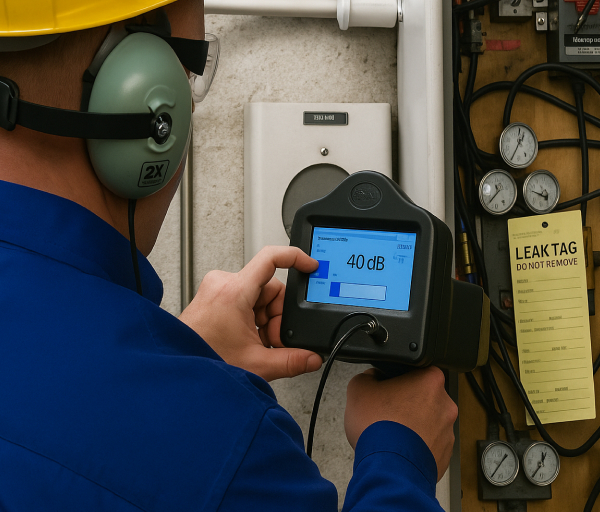
Ultrasonic testing captures high-frequency sound waves (beyond human hearing) emitted by leaks, friction, or electrical arcing. It can quickly locate compressed air and vacuum leaks, detect steam trap and valve malfunctions, and identify early signs of bearing fatigue or lubrication failure. Because ultrasonic detectors work in noisy industrial environments, they are ideal for mechanical, electrical, and fluid systems alike.
The technique is also effective in detecting corona discharge in electrical systems. By addressing small leaks or defects early, ultrasonic analysis helps reduce energy costs, improve reliability, and enhance overall plant safety.
Oil analysis examines lubricant samples for viscosity, contamination, oxidation, and metal wear particles – all indicators of machine health. By studying the condition of the lubricant, engineers can detect internal wear in gearboxes, pumps, and hydraulic systems long before visible damage occurs.
Spectrometric and ferrographic techniques reveal component degradation trends, allowing for optimized oil-change intervals and reduced maintenance costs. Regular oil monitoring also ensures proper lubrication, prevents seizure, and supports sustainability goals by minimizing oil waste. It’s a cost-effective cornerstone of any predictive maintenance strategy.
IoT-enabled smart sensors provide continuous, real-time monitoring of temperature, vibration, pressure, current, and humidity parameters across equipment. These wireless devices transmit data to cloud platforms that visualize health dashboards and trigger alerts when readings deviate from set limits.
Maintenance teams can remotely track trends, perform root-cause analysis, and schedule repairs based on data-driven insights. By digitizing the shop floor, IoT systems eliminate manual inspections, improve response time, and enable 24×7 asset visibility. This smart monitoring forms the backbone of Industry 4.0 predictive maintenance ecosystems.
Machine learning and AI diagnostics transform raw sensor data into actionable intelligence. Algorithms learn the normal operating signatures of equipment and automatically detect anomalies that signal early failure modes.
AI models correlate historical maintenance data, environmental conditions, and live readings to predict component wear or process deviations with high accuracy. These insights empower maintenance engineers to plan interventions just-in-time, avoiding both premature and delayed maintenance. As systems continue to learn, accuracy improves — enabling truly autonomous, self-optimizing maintenance environments.
Electrical Signature Analysis evaluates the current and voltage waveforms of electric motors to assess both electrical and mechanical health. Deviations in waveform patterns reveal issues like rotor bar defects, bearing wear, misalignment, or unbalanced loads.
ESA is especially useful for high-speed rotating machines, as it detects faults without direct contact or disassembly. The technique also uncovers power quality problems such as harmonics or unbalanced supply. When combined with vibration and thermal data, ESA provides a comprehensive, non-intrusive picture of equipment performance and reliability.

Early detection of anomalies prevents unplanned shutdowns

Need based Maintenance reduces unnecessary part replacements

Timely interventions minimize wear and secondary damages

Identifying faults in electrical, mechanical, or hydraulic systems prevents accidents

Better planning results in smoother operations and higher customer satisfaction

Parts are replaced only when required, reducing inventory costs

Detecting inefficiencies (air leaks, misaligned drives, worn bearings) lowers power consumption
Predictive Maintenance projects implemented
People trained on Planned Maintenance
Reduction in breakdowns
Reduction in maintenance costs

Focus on bottleneck, high-value assets or critical where failures have major cost or safety impact and analyze equipment failure frequency, downtime causes, and maintenance cost patterns.

Choose appropriate technologies — thermography, vibration, ultrasound, or oil analysis — based on asset type and failure modes. Build internal capability to operate diagnostic instruments and interpret data trends.

Capture normal operating parameters and compare ongoing readings to detect anomalies. Implement corrective actions based on data insights — replace, repair, or recalibrate as needed.

Integrate PdM results into preventive maintenance plans and continuously improve thresholds, models, and alert systems.
Thermography
Ultrasonic analysis

Oil Analysis
Vibration analysis

Machine learning & AI diagnostic
With experience across diverse industries and challenges, we deliver unparalleled insights and solutions especially designed as per the needs. For more details, contact us today!
